Monday, 14 June 2010

Canon GL1 MiniDV Digital Camcorder with Lens & Optical Image Stabilization


Optically Superior to Sony5

This is one incredible camera. Here are some of the best features about it:

-3CCDs

-L Series Fluorite Lens

-All Manual Controls

-Progressive Scan

-Optical Stabilization

-Large Manual Focus Ring

Of course we all know that 3CCDs are far better than one... I need not go into more depth there. As far as the lens goes some have argued that they see no difference of quality over that of Sony's. This may be due in part to the fact that they are looking for a difference in resolution. When compared in numbers to some of the 3CCD models of Sony you may think that this is a lower resolution camera (which can be a very deceiving thing). It is recognized that a camera with a high resolution in numbers does not equal a pleasing or sharper image. When you compare the color of a Sony and this GL1 (or any other Canon against a Sony for that matter) there will be no comparison. The Sony will inevitably lean towards the blues giving a very cold unnatural feeling which can often result in having to waste time in post by adding color corrections. The Canon will have a much warmer more natural coloring. With deeper richer blacks.

The Progressive Scan (or frame mode) is beautiful. It gives the footage a much more film like jitteriness instead of the liquid smooth interlaced footage that is usually the only option you have on most Sony camera models. It is called "frame mode" because it captures 30 FULL frames per second instead of 60 FIELDS per second (top field and bottom field) being joined together to make the 30 frames which when slowed down will show interlaced lines. Some say ...that Progressive Scan is only meant for a "digital motor drive" where you capture 30 frames per second with the intent of getting still pictures from it. Yes this is a possibility... but no video is not really high resolution enough to use this for any real purpose other than having a somewhat grainy image for a home web site. I have not heard of ANY professional using it for anything other than to shoot a real project as true video footage. Video to film transfer locations prefer people to use progressive scan to shoot on their GL1 or XL1 for film transfer. It loses much less quality in the process. There are many commercials and documentaries (as well as independent films) which have started shooting in progressive scan on the GL1 and XL1 in order to get the higher budget film look.

The manual controls on this camera give you such control that you can achieve truly professional results. You have control over - Shutter Speed Aperture Gain White Balance Focus exposure etc. If you want the choppy effect of Saving Private Ryan or Gladiator's battle scenes just up the shutter speed to 250 or higher. Or if you want a lot of background blur open the lens way up.

Ah yes... the image stabilization. You won't get anything close to it on other brands. They all have a slight shake and jitter never truly stabilizing it especially when zoomed. This one has none. It only floats. And of course if you want that jittery handheld look of some of the new films and such just turn it off. But when you want smooth non jittery handheld shots it's always there.

If you are trying to decide what camera to get always go down the Canon road. Almost all of them have features that Sony only tries to make up for with home userish built effects and such cheesy non-professional effects that one can achieve if they have a computer to edit on (and still want the effects by then. Why record it permanently when you might change your mind later). Some Sony users complain about how Canon does not have good still picture resolution. I say "who needs still pictures on a camcorder??" That should be left to 35mm or a digital camera devoted to that form of media alone. I have yet to see a printable good looking still even from a Sony. Both the video format and the small included memory cards cannot handle the resolution required of this. With all the manual controls the far superior color and the incredible look of progressive scan one must have only the choice to go Canon. If you are an aspiring documentary or commercial maker trying to decide between a GL1 and an XL1 (not likely) the advantage of the GL1 (besides the price) is that it is small. This allows you to be in crowds shooting without stares from everybody. Or shoot where you would otherwise be unable. This can also be a downfall. It may look wimpy to the client (of course once they see the footage they will probably buy one themselves). ....

Lastly I just want to say that I would highly recommend this camera but if you can afford it go with the XL1 (...) it is even better!More detail ...

Sunday, 13 June 2010

Canon XL2 3CCD MiniDV Camcorder w/20x Optical Zoom


The real story from someone who uses the camera4

O.K. I have been taking a beating from camera rental houses this past year so when I needed to finish a project that was dragging on and forcing me too shoot on many different days I said "what the heck" and put down the money for the XL2. I was a reluctant buyer not excited at all about buying a DV camera. I was ready to be disappointed by another crappy and expensive DV camera.


Two months later I'm glad I bought it and I'd say that it is the best prosumer DV camera out there period.


Here are some of the positives and negatives about the camera based on experience.


Positives:


1) Clean signal: While not as good as something like the Sony DSR 500 its a cleaner signal than the VX2000 PD150 and the Panasonic DVX100a. Of all the DV cameras I've shot on I like the XL2's signal the best.


2) Interlacing: I've shot a great deal on Sony cameras. Especially the DSR 500 and The Sony image is always funky the interlacing is always visible specifically in details like hair and what not. Even with all the menus set properly by a great DP the Sony cameras always have a very hard and interlaced look. Even When shooting in 60i mode The XL2 does not have this and it handles fine details better than the Sony cameras I am used to.


3) Buttons and menus: The design of the button lay out and menus is very good. If you have shot on the Panasonic DVX100a you will really enjoy how the canon is laid out you don't have to go deep into the menus for every shot on the XL2. The one really bad decision was putting the film grain and color bars on the same button. THAT was a mistake. Why they hell does this camera have a film grain button anyway?


4) BNC output: A small but really helpful addition to the XL2 is that it has a BNC out. For anyone who knows how those BNC to RCA adopters tend to fall off or get lost its about time that a pro-sumer camera included this simple thing for people who use an external monitor.


5) The custom menus:

For professionals: If you have shot on pro cameras you will naturally look at the custom menus as a joke a pro-sumer "toy". I won't try to tell you that they aren't a "toy" But they do actually work! Which is a great surprise. I have used the camera on sets and on outdoor documentary sports shoots. I find than things like the black stretch and the knee work and are helpful they are not like what you find on a Beta camera for example but they are a lot better than what else you can find for the money.


For Consumers: This camera comes with a lot of features that you won't use if you are a point and shoot "Let the camera do it for me" kind of person. However if you are willing to learn or interested in videography you will find these features interesting and with a little practice down right useful.


6) Color features:

To the professionals: These work too you don't get very deep control of the color gain and the RGB settings but you get some and they work pretty well which is saying a lot for a camera under $5000! I am developing a preference for shooting with the color gain and RGB settings set pretty high and then pulling them down in color correction if necessary. Desaturating in post using after effects gives great results but it has not been necessary all that often and I'd rather take the color out rather than trying to put it back in.


For the consumers: The color controls are better than on any other camera you are thinking about most of which will have none. The XL2 gives you noticable control over the saturation of the colors as well as how much red green and blue you see in the image.


7) Sound: I don't know what it is if its the mic or the signal processing but the XL2 has better quality sound than you would expect from a DV camera out of the box. Use a real mic and the results are great.


Negatives:


too many rip off artists trying to sell this camera. Purchase the camera only from a trusted and well known retailer no exceptions you will get ripped off.


1) The lens:

For Pros: You don't want this lens since it has no witness marks etc. Buy the body without the lens and put on the 16X manual servo zoom. It will cost a bit more but it will be worth it if you need any percision in your shooting.


For consumers: The standard lens is better than any other lens out there I think you'll find shooting with it a good experience .


2) The eyepiece:

For consumers: If you are a consumer don't worry about it its fine. Its only an issue in specific cases that pros encounter because of they way they shoot.


For pros: Its REALLY hard to make focusing decisions with the eyepiece that comes in the box. Its not so bad for run and gun doc work but if you are doing dramatic work or pulling focus you'll want to Upgrade or always use a monitor.


3) Its still DV: This is a really great camera for what it is but you are still shooting DV and you can run but you can't hide from all the inherent problems of the format.


4) Using the FIRE WIRE: WARNING!!!!! if you use Lacie external firewire drives among others the XL2 does not place nice with other devices in the fire wire chain. To log footage from the camera onto your computer you may have to turn off your external drives to do it. This is a for sure with Lacie drives. For many users this will mean either buying larger internal drives or capturing footage to an internal drive with the externals turned off and then transferring the footage later.


The professional should keep in mind:

1) The 24 and 30p frame rates: Naturally the XL2 does not output a true 24 or 30 frame rate. The camera gives you the choice of pull-down you want and then you can remove it in post. If you are going to true 24p output you have the option of 2:3:3:2 pull down which seems to work without problems with Cinema Tools.


2) All the weight of the camera is at the front so its having a shoulder pad is not that helpful since most of the weight is on your hand anyway.


3) It may be user error but on the last shoot I directed that used the XL2 there were some strange time code things happening. The DP (who I trust completely) was pre-setting the TC as is usually done but on some tapes the TC changed from the pre-set hour back to hour 0 at some point in the tape. Was this due to battery changes or something else? Who knows? The TC should never do this so I have no Idea why it happened but it obviously effects postproduction and makes generating an EDL impossible.


4) Assuming that you don't have the cash for an Anton Bauer upgrade The BP-945 batteries are good they last a long time. So with two of them the battery that comes with the camera and the 910 charge you are in great shape and will be able to shoot continuously no problem. If you are shooting in the field you will get 10+ hours of camera time out of these three batteries before you need to recharge.


5) The Pelican 1600 case is a little small if you want to break the camera down all the way. A bigger case is not a bad idea.More detail ...

Tuesday, 8 June 2010

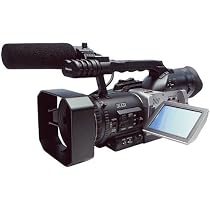
Panasonic Pro AG-DVX100BP(S) 3-CCD MiniDV Proline Camcorder wi th 10x Optical Zoom


great video camera5

I was torn between Sony and Panasonic (the Canons seemed to have many recurring complaints especially with the decks) and after reading several reviews became gradually partial to the Panasonic before ever having used one based on customer loyalty and consistently glowing testimonials.


Well I've never used the comparable Sony's JVC's or the Canon XL2 (some limited experience with the GL2) but as best I can tell without personal comparison this camera does in fact deserve all the great reviews.


The image quality is excellent and in many cases looks about as good as broadcast TV video (nonHD) and the camera allows a tremendous amount of image control--manual focus ring aperture (iris) gain adjustment shutter speed zebra control for overexposure white AND black balance adjusting daylight filters etc. The electronic viewfinder can even be focused via simple diopter. There are six preprogrammed but customizable settings for image control so the user can simply dial in whatever setting they need based on the shooting/lighting conditions. So for example you shoot occasionally under weak flourescents lights--you adjust the white balance and the gain and the detail level accordingly save it as a particular "scene file"; whenever you return to that same location or a similar shooting environment you can click over to the saved settings in an instant and start recording. The first four are factory set for video 60 frames; the last two are 24 fps for a more film-like quality which this camera handles beautifully.


What actually sold me on the camera in terms of hardware were the two XLR jacks--comparably priced models didn't seem to offer this. The XLR jacks allow the user to attach professional shotgun mics and bypass the mediocre factory one taking fuller advantage of 16bit 48khz stereo recording. I use a fairly inexpensive AZDEN mic and the improvement in sound quality is tremendous. If you were willing to invest in finer mics the audio quality would be better still. Having two XLR inputs means that in addition to recording live audio (like a mic) you can also mix in input from another pre-recorded source--all in the camera!


The lens by Leica is also impressive--it is a bit wide and is not interchangeable (although I believe there is an adaptive telephoto for $$$). I prefer shooting wide but if you have need a wide selection of lenses or don't enjoy the look of wide angle look to Canon.


The drawbacks are minor--the camera is rather cumbersome--and would certainly be tiresome for handheld use as it isn't designed for shoulder-mounted use. I shoot almost exclusively indoors with a tripod and so neither of these issues are relevant for me. Also irrelevant for me are reviews I've read which have indicated lackluster battery performance--again shooting indoors I always have it plugged in and thus haven't noticed any battery problems. The little menu joystick control button used to toggle the menu screens as well as the VCR playback options can be frustrating when you're tired but that is an extremely trivial concern really.


This camera is expensive even in the $1500+ prosumer class it tends more to professional range but I feel it is a great value considering what a fine piece of equipment it is and the wealth of features it offers. It is much much more than enough camera for the consumer and probably a little more than I need actually--I've used mine for a few months and I'm still learning how to wring better and better shooting from it. Once you've used it for a while it becomes clear why this particular model maintains a devoted following. If I have to replace this camera--provided I can afford to--the next camera would definitely be a Panasonic and probably be its big HD brother the HVX.More detail ...